NEWS
Japan Sports Council reveals cost of abandoning Zaha Hadid's Tokyo stadium design
POSTED 30 Aug 2016 . BY Kim Megson
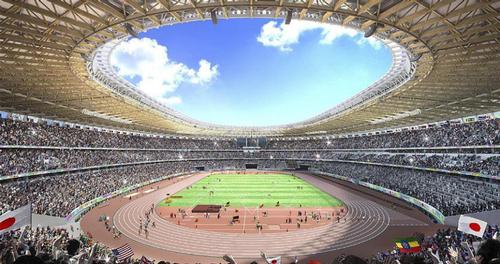
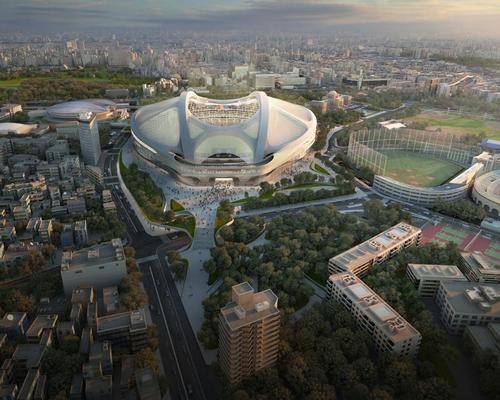
Zaha Hadid Architects were dropped from the Olympic Stadium project just days after having their design approved Credit: Zaha Hadid Architects
Credit: Zaha Hadid Architects
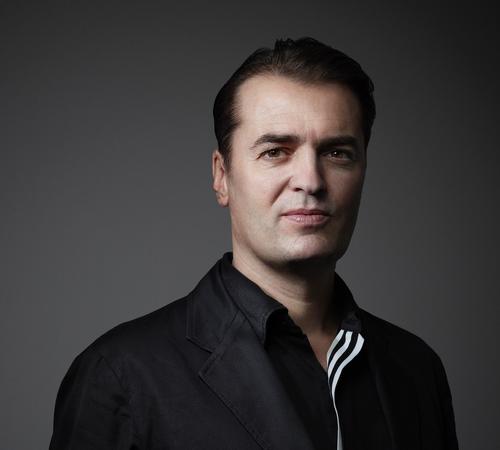
We were so happy to get that project, it was a well deserved win and we were looking forward to 2020. That was pulled away from us. We found the whole experience incredibly distressing.
– Patrik Schumacher, director at Zaha Hadid Architects
The body in charge of organising Tokyo’s Olympic Games has admitted its decision to cancel Zaha Hadid Architects’ (ZHA) National Olympic Stadium design in favour of a cheaper alternative has already cost it ¥68.6bn (US$650.6m, €582.4m, £497m) in compensation payouts.

According to media reports in the country, the Japan Sports Council (JSC) announced it has already earmarked the sum – ¥600m US$5.8m, €5.2m, £4.4m) higher than the amount estimated by the sports ministry in August 2015 – to cancel the original construction project.

The Tokyo Reporter and ANN News claim the unrecoverable figure includes a ¥1.39bn (US$13.5m, €12.1m, £10.3m) payment to ZHA to cover stadium design fees and the cost of closing their Tokyo office. Four other companies, including Japanese architects Nikken Sekkei, have received ¥3.8bn (US$37.1m, €33.2m, £28.3m) in design costs, while engineering firms Taisei Corp and Takenaka Corp have received ¥777m (US$7.6m, €6.8m, £5.8m).

It remains to be seen whether the payment will put an end to the acrimonious saga, which began when ZHA were dropped from the Olympic Stadium project, despite winning an international design competition. Prime Minister Shinzo Abe said the cost of the stadium – which had been criticised by Japanese architects including Toyo Ito and Fumihiko Maki – had “just ballooned too much” after almost doubling to US$2bn (€1.79bn, £1.52bn).

A succession of skirmishes followed, with ZHA issuing a robust defence of their design, blaming the cost increases on Japan's overheated construction market and the tendering process for the building, in which contractors were appointed before they submitted cost estimates.

"Our warning was not heeded that selecting contractors too early in a heated construction market and without sufficient competition would lead to an overly high estimate of the cost of construction,” they said.

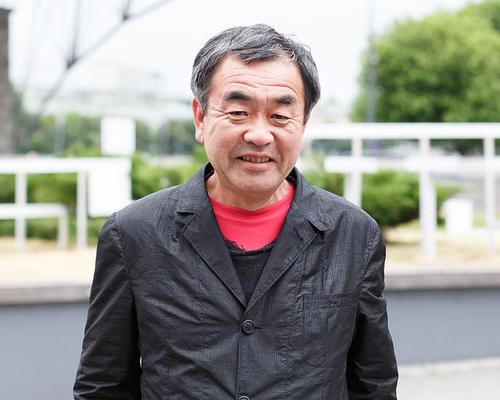
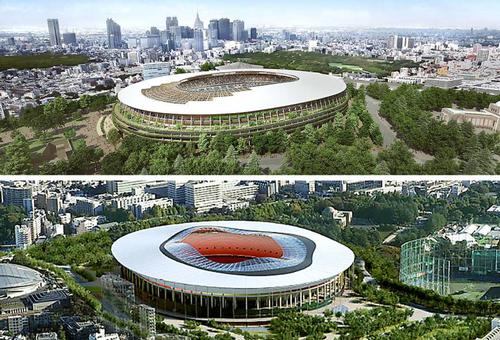
In December 2015, Kengo Kuma was selected to design the stadium within a budget of ¥155bn (US$1.5bn, €1.3bn, £1.1bn). That decision also prompted anger, with ZHA saying his design shared similarities with theirs – an accusation he has flatly denied.

Summarising the saga in an interview with Sports Management's sister publicationCLAD, ZHA director Patrik Schumacher said: “It was the biggest setback ever. I found it absolutely shocking and Zaha was devastated. We were so happy to get that project, it was a well deserved win and we were looking forward to 2020. That was pulled away from us. We found the whole experience incredibly distressing.

“It was such a humiliation. The loss of two years intense, passionate work, not to mention the guys flying to Japan all of the time. You can only do that if you have that reward in sight.

“Everyone was depressed and demoralised, and there was also the potential shock to our reputation – the perception that this was due to our obstinacy or outrageous extravagance in terms of the design. None of this was true, but the suspicion lingers on in the minds of clients. That's why we made a PR effort to try to explain what happened and how conscientious we'd been in the process, signalling all the way through until the final decision that we were totally willing to do anything.”

Kuma told CLAD that communication problems were to blame for the controversy. “I think it’s a problem in Japan,” he said. “For foreign architects to work in Japan is not easy because the system is totally different and the language barrier exists between Japanese and the foreigners. Zaha was very much frustrated with that kind of miscommunication and I understand that difficulty.”

Construction on Kuma’s Olympic Stadium is set to begin in the coming months and is due to be completed by November 2019.

It will host the opening and closing ceremonies for the 2020 Games, as well as athletics, rugby and football fixtures.
RELATED STORIES
  Kengo Kuma hits back in Tokyo 2020 stadium row


The architect developing Japan’s National Stadium for the Tokyo 2020 Olympic Games has publicly refuted claims his studio have copied from an earlier design submitted by Zaha Hadid Architects.
  Zaha Hadid refuses to hand over copyright to Tokyo 2020 stadium design


Zaha Hadid Architects (ZHA) have claimed the Japan Sports Council are withholding payment for the studio’s design for the Japan National Stadium in Tokyo unless the architects give up the copyright to the designs and sign a confidentiality clause.
  Zaha Hadid cries foul as Tokyo 2020 stadium design is chosen


Japanese architects Kengo Kuma have been selected to design the 80,000 capacity stadium which will be the centrepiece of the 2020 Olympics in Tokyo.
  Japan Sports Council unveils Olympic Stadium designs


Two stadium designs for the 2020 Tokyo Olympics have been revealed by the Japanese Sports Council.


CONTACT US

Leisure Media
Tel: +44 (0)1462 431385

©Cybertrek 2026

ABOUT LEISURE MEDIA
LEISURE MEDIA MAGAZINES
LEISURE MEDIA HANDBOOKS
LEISURE MEDIA WEBSITES
LEISURE MEDIA PRODUCT SEARCH
PRINT SUBSCRIPTIONS
FREE DIGITAL SUBSCRIPTIONS
 
Leisure Management - Japan Sports Council reveals cost of abandoning Zaha Hadid's Tokyo stadium design...
15 Jun 2026 Leisure Management: daily news and jobs
 
 
HOME
JOBS
NEWS
FEATURES
PRODUCTS
FREE DIGITAL SUBSCRIPTION
PRINT SUBSCRIPTION
ADVERTISE
CONTACT US
Sign up for FREE ezine
Latest news

30 Aug 2016

Japan Sports Council reveals cost of abandoning Zaha Hadid's Tokyo stadium design
BY Kim Megson

Zaha Hadid Architects were dropped from the Olympic Stadium project just days after having their design approved

Zaha Hadid Architects were dropped from the Olympic Stadium project just days after having their design approved
photo: Zaha Hadid Architects

The body in charge of organising Tokyo’s Olympic Games has admitted its decision to cancel Zaha Hadid Architects’ (ZHA) National Olympic Stadium design in favour of a cheaper alternative has already cost it ¥68.6bn (US$650.6m, €582.4m, £497m) in compensation payouts.

According to media reports in the country, the Japan Sports Council (JSC) announced it has already earmarked the sum – ¥600m US$5.8m, €5.2m, £4.4m) higher than the amount estimated by the sports ministry in August 2015 – to cancel the original construction project.

The Tokyo Reporter and ANN News claim the unrecoverable figure includes a ¥1.39bn (US$13.5m, €12.1m, £10.3m) payment to ZHA to cover stadium design fees and the cost of closing their Tokyo office. Four other companies, including Japanese architects Nikken Sekkei, have received ¥3.8bn (US$37.1m, €33.2m, £28.3m) in design costs, while engineering firms Taisei Corp and Takenaka Corp have received ¥777m (US$7.6m, €6.8m, £5.8m).

It remains to be seen whether the payment will put an end to the acrimonious saga, which began when ZHA were dropped from the Olympic Stadium project, despite winning an international design competition. Prime Minister Shinzo Abe said the cost of the stadium – which had been criticised by Japanese architects including Toyo Ito and Fumihiko Maki – had “just ballooned too much” after almost doubling to US$2bn (€1.79bn, £1.52bn).

A succession of skirmishes followed, with ZHA issuing a robust defence of their design, blaming the cost increases on Japan's overheated construction market and the tendering process for the building, in which contractors were appointed before they submitted cost estimates.

"Our warning was not heeded that selecting contractors too early in a heated construction market and without sufficient competition would lead to an overly high estimate of the cost of construction,” they said.

In December 2015, Kengo Kuma was selected to design the stadium within a budget of ¥155bn (US$1.5bn, €1.3bn, £1.1bn). That decision also prompted anger, with ZHA saying his design shared similarities with theirs – an accusation he has flatly denied.

Summarising the saga in an interview with Sports Management's sister publicationCLAD, ZHA director Patrik Schumacher said: “It was the biggest setback ever. I found it absolutely shocking and Zaha was devastated. We were so happy to get that project, it was a well deserved win and we were looking forward to 2020. That was pulled away from us. We found the whole experience incredibly distressing.

“It was such a humiliation. The loss of two years intense, passionate work, not to mention the guys flying to Japan all of the time. You can only do that if you have that reward in sight.

“Everyone was depressed and demoralised, and there was also the potential shock to our reputation – the perception that this was due to our obstinacy or outrageous extravagance in terms of the design. None of this was true, but the suspicion lingers on in the minds of clients. That's why we made a PR effort to try to explain what happened and how conscientious we'd been in the process, signalling all the way through until the final decision that we were totally willing to do anything.”

Kuma told CLAD that communication problems were to blame for the controversy. “I think it’s a problem in Japan,” he said. “For foreign architects to work in Japan is not easy because the system is totally different and the language barrier exists between Japanese and the foreigners. Zaha was very much frustrated with that kind of miscommunication and I understand that difficulty.”

Construction on Kuma’s Olympic Stadium is set to begin in the coming months and is due to be completed by November 2019.

It will host the opening and closing ceremonies for the 2020 Games, as well as athletics, rugby and football fixtures.




Connect with
Leisure Management
Magazine:
View issue contents
Sign up:
Instant Alerts/zines

Print edition
 

News headlines
Global industry organisations join forces to call for physical activity to be embedded into GLP-1 care pathways
Global industry organisations join forces to call for physical activity to be embedded into GLP-1 care pathways   15 Jun 2026

International industry lobbying associations are calling for physical activity and strength training to be deeply integrated with GLP-1 .... more>>

Barons Eden rebrands to Hiddenwell ahead of spa hotel portfolio expansion
Barons Eden rebrands to Hiddenwell ahead of spa hotel portfolio expansion   15 Jun 2026

Barons Eden, the UK parent company that operates luxury destination properties in England, has rebranded to become .... more>>

Les Mills calls on the industry to support UNICEF
Les Mills calls on the industry to support UNICEF   12 Jun 2026

Global group exercise specialist, Les Mills, is inviting operators to sign up to its Workout for the World event on 20 June, in support of .... more>>

Belgin Aksoy marks 15 years of Global Wellness Day
Belgin Aksoy marks 15 years of Global Wellness Day   12 Jun 2026

Global Wellness Day (GWD) marked its 15th anniversary on Saturday 13 June 2026, with the theme: #JoyMagenta – a celebration of the healing .... more>>

HUM2N launches longevity clinic at Six Senses London
HUM2N launches longevity clinic at Six Senses London   12 Jun 2026

Global luxury hospitality brand, Six Senses, has partnered with longevity healthcare provider, HUM2N, to launch a clinic at Six Senses London, at .... more>>

Mayrlife opens first hotel day clinic in partnership with Rosewood Vienna
Mayrlife opens first hotel day clinic in partnership with Rosewood Vienna   11 Jun 2026

As part of its first hotel partnership, Mayrlife – the medical health resort company known for its site in Altaussee, Austria – has launched a day .... more>>

Company profile


WDT Werner Dosiertechnik GmbH & Co. KG

WDT was founded 40 years ago by Dietmar Werner with the invention of a dosing system for calcium hypochlorite for swimming pools.

View full profile>>

Catalogue gallery


Featured Supplier

Glow beyond protection: meet Comfort Zone Hydramemory Hybrid Glow SPF 30

Glow beyond protection: meet Comfort Zone Hydramemory Hybrid Glow SPF 30

Sun protection is no longer just about shielding the skin – it's about enhancing it. More>>


in this issue

• Virgin gets right to wipe out rent arrears
• Fitness industry mourns passing of Jan Spaticchia
• STA offers mindfulness resources


Latest jobs

Jobs Search


Community Activator Coach Apprentice
Salary: 16,686
Location: Stowmarket, Suffolk
Company: Everyone Active
Membership Advisor
Salary: Competitive salary plus commission & benefits
Location: Market Rasen
Company: Everyone Active
Customer Service Advisor
Salary: Competitive
Location: Market Rasen
Company: Everyone Active
Diary dates
Powered by leisurediary.com

15-18 Jun 2026

HLTH Europe

RAI Convention Centre, Amsterdam, Netherlands


Published by Leisure Media Tel: +44 (0)1462 431385 | Contact us | About us | © Cybertrek Ltd