NEWS
Collaboration vs aggregation - what’s the difference?
POSTED 25 Jun 2019 . BY Alister Rollins
MoveGB drives loyalty and retention
As an industry, we still underestimate the power of a truly varied fitness regime - and the growing appetite for it, especially among emerging customer segments.
– Alister Rollins, CEO of MoveGB
As an industry, we still underestimate the power of a truly varied fitness regime. We also probably still underestimate the growing appetite for it, especially among emerging customer segments.

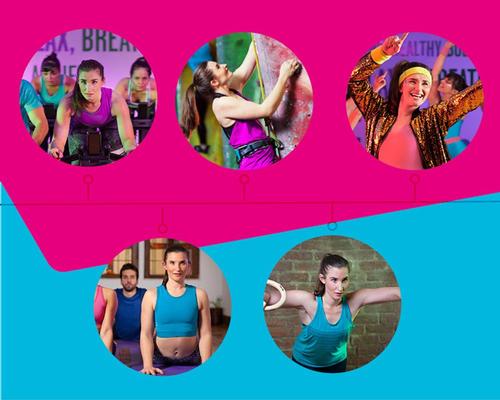
True variety doesn’t just make the fitness regime more effective, it makes the customer more active for longer.

To get customers active in the first place, building a routine with them or enabling them to build one themselves, is critical. We all recognise and value this insight.

However, at Move we passionately believe equal focus should be given to enabling real variety of activity within that routine.

Exercise scientists at the University of Florida observed individuals who modified their workouts every two weeks over an eight-week period. Those individuals enjoyed their workouts more and were more inclined to stick with their exercise programs when compared to individuals who followed the same workout regimens week after week.

Move partners see exactly the same pattern, only in our context we see it created by a variety of class or activity attendance. And if anything, the effect is even bigger.

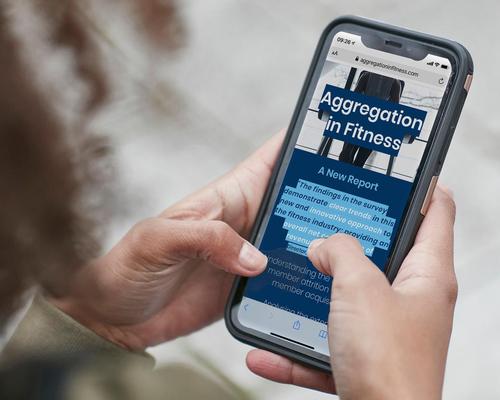
I recognise that Move is sometimes mentioned in the same breath as aggregators. And, no, I don’t think aggregation per se is inherently problematic, especially if focused on one-off passes for lead generation. It can drive higher penetration across the market as a whole.

The existence of aggregators in adjacent categories only serves to shape customer expectations, behaviours and habits across all industries including our own. To stick our heads in the sand on this front is just self-defeating, especially with regard to younger audiences.

But while pure aggregation might deliver choice and potential value for the customer, it only engenders promiscuity. It does not engender loyalty. And this is where Move is different.

A recent study comparing single-venue users (ie non-MoveGB) with multi-venue users (ie MoveGB members) showed that the multi-venue customers stay 7.5 months longer on average.

So, clearly, there is a different dynamic at work, and collaboration is central to it.

Activity variety keeps customers physically challenged but, crucially, more mentally stimulated too. Add in the social benefits of group exercise and you have a perfect recipe to keep customers coming back *and* make them more active.

By enabling collaboration between our partners, we’re unlocking this possibility.

In that previous study I mentioned, this then translates into 7.5 months of real extra value to share with our partners.

The key is to deliver value for both customer - through the right pricing where variety and convenience is valued more, and for operator through tapping into this demand and unlocking higher retention rates, new customer segments and increased lifetime value.

Do both, and the whole market grows.

And that’s what we call the Move effect.
RELATED STORIES
  Independent report on fitness aggregation to be launched in February


A white paper, charting the effects of intermediary services – or aggregators – in the fitness sector will be published on 10 February.
  MoveGB appoints Leigh Phillipson as director of partnerships


MoveGB has named Leigh Phillipson as director of partnerships.


CONTACT US

Leisure Media
Tel: +44 (0)1462 431385

©Cybertrek 2026

ABOUT LEISURE MEDIA
LEISURE MEDIA MAGAZINES
LEISURE MEDIA HANDBOOKS
LEISURE MEDIA WEBSITES
LEISURE MEDIA PRODUCT SEARCH
PRINT SUBSCRIPTIONS
FREE DIGITAL SUBSCRIPTIONS
 
Leisure Management - Collaboration vs aggregation - what’s the difference?...
15 Jun 2026 Leisure Management: daily news and jobs
 
 
HOME
JOBS
NEWS
FEATURES
PRODUCTS
FREE DIGITAL SUBSCRIPTION
PRINT SUBSCRIPTION
ADVERTISE
CONTACT US
Sign up for FREE ezine
Latest news

25 Jun 2019

Collaboration vs aggregation - what’s the difference?
BY Alister Rollins

MoveGB drives loyalty and retention

MoveGB drives loyalty and retention

As an industry, we still underestimate the power of a truly varied fitness regime. We also probably still underestimate the growing appetite for it, especially among emerging customer segments.

True variety doesn’t just make the fitness regime more effective, it makes the customer more active for longer.

To get customers active in the first place, building a routine with them or enabling them to build one themselves, is critical. We all recognise and value this insight.

However, at Move we passionately believe equal focus should be given to enabling real variety of activity within that routine.

Exercise scientists at the University of Florida observed individuals who modified their workouts every two weeks over an eight-week period. Those individuals enjoyed their workouts more and were more inclined to stick with their exercise programs when compared to individuals who followed the same workout regimens week after week.

Move partners see exactly the same pattern, only in our context we see it created by a variety of class or activity attendance. And if anything, the effect is even bigger.

I recognise that Move is sometimes mentioned in the same breath as aggregators. And, no, I don’t think aggregation per se is inherently problematic, especially if focused on one-off passes for lead generation. It can drive higher penetration across the market as a whole.

The existence of aggregators in adjacent categories only serves to shape customer expectations, behaviours and habits across all industries including our own. To stick our heads in the sand on this front is just self-defeating, especially with regard to younger audiences.

But while pure aggregation might deliver choice and potential value for the customer, it only engenders promiscuity. It does not engender loyalty. And this is where Move is different.

A recent study comparing single-venue users (ie non-MoveGB) with multi-venue users (ie MoveGB members) showed that the multi-venue customers stay 7.5 months longer on average.

So, clearly, there is a different dynamic at work, and collaboration is central to it.

Activity variety keeps customers physically challenged but, crucially, more mentally stimulated too. Add in the social benefits of group exercise and you have a perfect recipe to keep customers coming back *and* make them more active.

By enabling collaboration between our partners, we’re unlocking this possibility.

In that previous study I mentioned, this then translates into 7.5 months of real extra value to share with our partners.

The key is to deliver value for both customer - through the right pricing where variety and convenience is valued more, and for operator through tapping into this demand and unlocking higher retention rates, new customer segments and increased lifetime value.

Do both, and the whole market grows.

And that’s what we call the Move effect.



Connect with
Leisure Management
Magazine:
View issue contents
Sign up:
Instant Alerts/zines

Print edition
 

News headlines
Fitness Worx introduces blood testing
Fitness Worx introduces blood testing   15 Jun 2026

Independent operator, Fitness Worx Gyms, is introducing private blood testing as a service to members.

....
more>>
Global industry organisations join forces to call for physical activity to be embedded into GLP-1 care pathways
Global industry organisations join forces to call for physical activity to be embedded into GLP-1 care pathways   15 Jun 2026

International industry lobbying associations are calling for physical activity and strength training to be deeply integrated with GLP-1 .... more>>

Barons Eden rebrands to Hiddenwell ahead of spa hotel portfolio expansion
Barons Eden rebrands to Hiddenwell ahead of spa hotel portfolio expansion   15 Jun 2026

Barons Eden, the UK parent company that operates luxury destination properties in England, has rebranded to become .... more>>

Les Mills calls on the industry to support UNICEF
Les Mills calls on the industry to support UNICEF   12 Jun 2026

Global group exercise specialist, Les Mills, is inviting operators to sign up to its Workout for the World event on 20 June, in support of .... more>>

Belgin Aksoy marks 15 years of Global Wellness Day
Belgin Aksoy marks 15 years of Global Wellness Day   12 Jun 2026

Global Wellness Day (GWD) marked its 15th anniversary on Saturday 13 June 2026, with the theme: #JoyMagenta – a celebration of the healing .... more>>

HUM2N launches longevity clinic at Six Senses London
HUM2N launches longevity clinic at Six Senses London   12 Jun 2026

Global luxury hospitality brand, Six Senses, has partnered with longevity healthcare provider, HUM2N, to launch a clinic at Six Senses London, at .... more>>

Company profile


Serco Leisure

Serco Leisure Operating Limited is one of the UK’s leading national operators of leisure centres, destination venues and elite sporting facilities.

View full profile>>

Catalogue gallery


Featured Supplier

Glow beyond protection: meet Comfort Zone Hydramemory Hybrid Glow SPF 30

Glow beyond protection: meet Comfort Zone Hydramemory Hybrid Glow SPF 30

Sun protection is no longer just about shielding the skin – it's about enhancing it. More>>



in this issue

• Virgin gets right to wipe out rent arrears
• Fitness industry mourns passing of Jan Spaticchia
• STA offers mindfulness resources


Latest jobs

Jobs Search


Community Activator Coach Apprentice
Salary: 16,686
Location: Stowmarket, Suffolk
Company: Everyone Active
Membership Advisor
Salary: Competitive salary plus commission & benefits
Location: Market Rasen
Company: Everyone Active
Customer Service Advisor
Salary: Competitive
Location: Market Rasen
Company: Everyone Active
Diary dates
Powered by leisurediary.com

15-18 Jun 2026

HLTH Europe

RAI Convention Centre, Amsterdam, Netherlands


Published by Leisure Media Tel: +44 (0)1462 431385 | Contact us | About us | © Cybertrek Ltd