NEWS
New GWI study unveils global wellness market leaders: US, China and Germany
POSTED 30 Jan 2024 . BY Megan Whitby
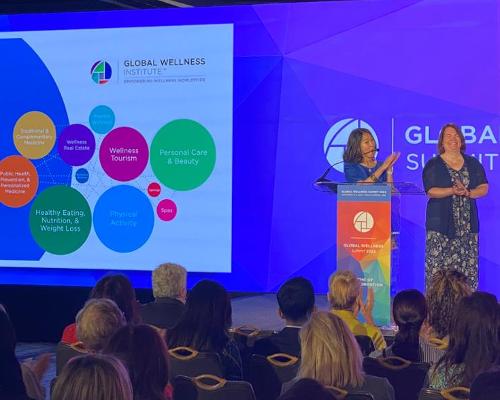
Declared the world's largest wellness market, the US' highest achieving sector is healthy eating, nutrition and weight loss Credit: Shutterstock/Josep Suria
The GWI has published new, in-depth research on 145 national wellness markets
Findings indicate the three biggest are the US (US$1.8 trillion), China (US$790 billion) and Germany (US$269 billion)
Global consumers now spend as much on wellness per capita as on healthcare
The top ten largest markets represent 70 per cent of the global wellness economy
The US, China, Germany, Japan and the UK have been identified as the world’s five largest wellness markets in new research released today by the Global Wellness Institute (GWI).

Called The Global Wellness Economy: Country Rankings, the new study provides market size, rankings, analysis and per capita wellness spending for 145 nations.

Findings show the US remains the undisputed goliath in wellness spending, with an annual market worth US$1.8 trillion, and ranking first in nine of the 11 wellness sectors measured by the GWI.

Almost all the top 25 wellness markets have seen strong growth since the pandemic, with the UK, the Netherlands, the US, Mexico, Canada and Australia as standouts, surpassing their pre-pandemic market sizes by 120 per cent or more.

Globally, the wellness economy drives 5.6 per cent of total GDP, which, according to the GWI, means one in every 20 “dollars” spent by consumers worldwide is on wellness.

To put this wellness spending in context, the research finds that annual, global per capita spending on wellness (US$706) is on par with consumer out-of-pocket spending on healthcare (US$711).

At the regional level, per capita wellness spending is higher than consumer out-of-pocket spending on healthcare across every region except North America. And wellness spending per capita is higher than spending on clothing/shoes (US$289) and hotels/restaurants (US$475) all across the world (Euromonitor data).

In countries like Switzerland, Iceland and the US, people spend far more: on average, over US$5,300 a year on wellness.

“For countries interested in growing their wellness economy, it’s crucial to know where they stand in this massive global industry,” said Ophelia Yeung and Katherine Johnston, GWI senior research fellows.

“It’s also important to see how different countries’ wellness markets have responded to the impacts of the pandemic.”

The report is a sister publication to GWI’s recent 2023 Global Wellness Economy Monitor, a complete global update on all 11 wellness sectors.

Top 25 national wellness markets

Numbers refer to market size and annual growth rate 2020-2022:

1) US – US$1.8 trillion – 14 per cent
2) China – US$790 billion – 8.9 per cent
3) Germany – US$269 billion – 16.8 per cent
4) Japan – US$241 billion – minus 3.9 per cent
5) UK – US$224 billion – 19.4 per cent
6) France – US$172 billion – 11.6 per cent
7) India – US$132.5 billion – 16.5 per cent
8) Canada – US$128 billion – 13.5 per cent
9) S. Korea – US$113 billion – 9.4 per cent
10) Italy – US$112 billion – 7.9 per cent
11) Australia – US$110 billion – 12.9 per cent
12) Brazil – US$96 billion – 18.2 per cent
13) Russia – US$94.5 billion – 13.2 per cent
14) Spain – US$83 billion – 12.4 per cent
15) Mexico – US$74 billion – 25.2 per cent
16) Netherlands – US$50 billion – 12.1 per cent
17) Switzerland – US$50 billion – 14.5 per cent
18) Indonesia – US$49 billion – 5.9 per cent
19) Turkey – US$45 billion – 14 per cent
20) Taiwan – US$43 billion – 5.1 per cent
21) Austria – US$42 billion – 13.9 per cent
22) Philippines – US$41 billion – 8.9 per cent
23) Poland – US$39 billion – 11.1 per cent
24) Thailand – US$35 billion – 8.5 per cent
25) Sweden – US$30 billion – 7.5 per cent

The top 10 largest markets represent 70 per cent of the global wellness economy, while the top 25 represent 86 per cent.

The GWI found that the vast majority of the 25 largest wellness markets have seen robust recent growth. Comparing market sizes in 2019 vs. 2022, 22 of 25 countries (except Thailand, Japan and Brazil) are now larger than pre-pandemic, as measured in US dollars.

But the GWI says it’s important to note that currency depreciation impacts data for countries like Japan, Brazil and some eurozone countries like Germany, France and Italy. For instance, the Japanese yen fell by 19.8 per cent against the US dollar in 2022, so if it looks like its wellness market shrank by 3.9 per cent annually from 2020 to 2022 in dollars, it actually grew 6.6 per cent each year when measured in yen.

Wellness spending per capita: top 12 countries

1) Seychelles – US$8,097
2) Switzerland – US$5,737
3) Iceland – US$5,523
4) Aruba – US$5,361
5) US – US$5,321
6) Austria – US$4,683
7) Australia – US$4,218
8) Norway – US$4,197
9) Denmark – US$3,846
10) New Zealand – US$3,689
11) UK – US$3,342
12)Canada – US$3,287

The GWI discovered that spending on wellness is highest in wealthy countries that also rank in the top 25 for GDP per capita, including Switzerland, Iceland, the US, Austria and Australia.

Those countries have seen significant recent growth in wellness spending (per capita): in the US that spend has risen US$1,636 – and in Switzerland US$1,365 – between 2020 and 2022.

While it may be surprising to see small countries like the Seychelles and Aruba so high on this list (the Maldives and the Bahamas also rank in the top 25), the GWI says it’s because these islands are major high-end wellness tourism destinations, with a large portion (50-90 per cent) of their wellness spending coming from inbound wellness tourists rather than locals.

The GWI describes the impact of the wellness market – heavily dominated by inbound wellness tourism – on these countries’ economies as “staggering”. In the Seychelles, the wellness market accounts for 42 per cent of the total economy, while in the Maldives that number is 22.6 per cent.

The ratio of how much the wellness economy contributes to GDP is highest in North America (6.9 per cent) and Europe (5.8 per cent) – and lowest in the Middle East-North Africa region, at 3.3 per cent.

North America and Europe’s wellness markets have been growing faster than the overall economy. Among the top 25 wellness markets, some of the countries where wellness makes up a bigger percentage of GDP are the Philippines (10.1 per cent), Austria (9 per cent), the UK (7.3 per cent), the US (7 per cent) and South Korea (6.8 per cent).
RELATED STORIES
  FEATURE: News report: Peak performance


Fresh research shows the global wellness economy is now worth US$5.6 trillion
  FEATURE: Event report: Global Wellness Summit 2023


International spa figures convened in Miami for the 15th Global Wellness Summit. Jane Kitchen reveals her top takeaways
  Global wellness economy reaches record-breaking $5.6trn – predicted to hit $8.5trn by 2027


The global wellness economy will be worth US$8.5 trillion by 2027, according to new research unveiled by the Global Wellness Institute (GWI).
  Japan named world’s third biggest wellness economy, worth US$303 billion


Japan has the third largest wellness economy globally – worth US$303 billion (£242.6 billion, €283 billion) – according to data from the Global Wellness Institute (GWI).


CONTACT US

Leisure Media
Tel: +44 (0)1462 431385

©Cybertrek 2026

ABOUT LEISURE MEDIA
LEISURE MEDIA MAGAZINES
LEISURE MEDIA HANDBOOKS
LEISURE MEDIA WEBSITES
LEISURE MEDIA PRODUCT SEARCH
PRINT SUBSCRIPTIONS
FREE DIGITAL SUBSCRIPTIONS
 
Leisure Management - New GWI study unveils global wellness market leaders: US, China and Germany...
08 Jun 2026 Leisure Management: daily news and jobs
 
 
HOME
JOBS
NEWS
FEATURES
PRODUCTS
FREE DIGITAL SUBSCRIPTION
PRINT SUBSCRIPTION
ADVERTISE
CONTACT US
Sign up for FREE ezine
Latest news

30 Jan 2024

New GWI study unveils global wellness market leaders: US, China and Germany
BY Megan Whitby

Declared the world's largest wellness market, the US' highest achieving sector is healthy eating, nutrition and weight loss

Declared the world's largest wellness market, the US' highest achieving sector is healthy eating, nutrition and weight loss
photo: Shutterstock/Josep Suria

The US, China, Germany, Japan and the UK have been identified as the world’s five largest wellness markets in new research released today by the Global Wellness Institute (GWI).

Called The Global Wellness Economy: Country Rankings, the new study provides market size, rankings, analysis and per capita wellness spending for 145 nations.

Findings show the US remains the undisputed goliath in wellness spending, with an annual market worth US$1.8 trillion, and ranking first in nine of the 11 wellness sectors measured by the GWI.

Almost all the top 25 wellness markets have seen strong growth since the pandemic, with the UK, the Netherlands, the US, Mexico, Canada and Australia as standouts, surpassing their pre-pandemic market sizes by 120 per cent or more.

Globally, the wellness economy drives 5.6 per cent of total GDP, which, according to the GWI, means one in every 20 “dollars” spent by consumers worldwide is on wellness.

To put this wellness spending in context, the research finds that annual, global per capita spending on wellness (US$706) is on par with consumer out-of-pocket spending on healthcare (US$711).

At the regional level, per capita wellness spending is higher than consumer out-of-pocket spending on healthcare across every region except North America. And wellness spending per capita is higher than spending on clothing/shoes (US$289) and hotels/restaurants (US$475) all across the world (Euromonitor data).

In countries like Switzerland, Iceland and the US, people spend far more: on average, over US$5,300 a year on wellness.

“For countries interested in growing their wellness economy, it’s crucial to know where they stand in this massive global industry,” said Ophelia Yeung and Katherine Johnston, GWI senior research fellows.

“It’s also important to see how different countries’ wellness markets have responded to the impacts of the pandemic.”

The report is a sister publication to GWI’s recent 2023 Global Wellness Economy Monitor, a complete global update on all 11 wellness sectors.

Top 25 national wellness markets

Numbers refer to market size and annual growth rate 2020-2022:

1) US – US$1.8 trillion – 14 per cent
2) China – US$790 billion – 8.9 per cent
3) Germany – US$269 billion – 16.8 per cent
4) Japan – US$241 billion – minus 3.9 per cent
5) UK – US$224 billion – 19.4 per cent
6) France – US$172 billion – 11.6 per cent
7) India – US$132.5 billion – 16.5 per cent
8) Canada – US$128 billion – 13.5 per cent
9) S. Korea – US$113 billion – 9.4 per cent
10) Italy – US$112 billion – 7.9 per cent
11) Australia – US$110 billion – 12.9 per cent
12) Brazil – US$96 billion – 18.2 per cent
13) Russia – US$94.5 billion – 13.2 per cent
14) Spain – US$83 billion – 12.4 per cent
15) Mexico – US$74 billion – 25.2 per cent
16) Netherlands – US$50 billion – 12.1 per cent
17) Switzerland – US$50 billion – 14.5 per cent
18) Indonesia – US$49 billion – 5.9 per cent
19) Turkey – US$45 billion – 14 per cent
20) Taiwan – US$43 billion – 5.1 per cent
21) Austria – US$42 billion – 13.9 per cent
22) Philippines – US$41 billion – 8.9 per cent
23) Poland – US$39 billion – 11.1 per cent
24) Thailand – US$35 billion – 8.5 per cent
25) Sweden – US$30 billion – 7.5 per cent

The top 10 largest markets represent 70 per cent of the global wellness economy, while the top 25 represent 86 per cent.

The GWI found that the vast majority of the 25 largest wellness markets have seen robust recent growth. Comparing market sizes in 2019 vs. 2022, 22 of 25 countries (except Thailand, Japan and Brazil) are now larger than pre-pandemic, as measured in US dollars.

But the GWI says it’s important to note that currency depreciation impacts data for countries like Japan, Brazil and some eurozone countries like Germany, France and Italy. For instance, the Japanese yen fell by 19.8 per cent against the US dollar in 2022, so if it looks like its wellness market shrank by 3.9 per cent annually from 2020 to 2022 in dollars, it actually grew 6.6 per cent each year when measured in yen.

Wellness spending per capita: top 12 countries

1) Seychelles – US$8,097
2) Switzerland – US$5,737
3) Iceland – US$5,523
4) Aruba – US$5,361
5) US – US$5,321
6) Austria – US$4,683
7) Australia – US$4,218
8) Norway – US$4,197
9) Denmark – US$3,846
10) New Zealand – US$3,689
11) UK – US$3,342
12)Canada – US$3,287

The GWI discovered that spending on wellness is highest in wealthy countries that also rank in the top 25 for GDP per capita, including Switzerland, Iceland, the US, Austria and Australia.

Those countries have seen significant recent growth in wellness spending (per capita): in the US that spend has risen US$1,636 – and in Switzerland US$1,365 – between 2020 and 2022.

While it may be surprising to see small countries like the Seychelles and Aruba so high on this list (the Maldives and the Bahamas also rank in the top 25), the GWI says it’s because these islands are major high-end wellness tourism destinations, with a large portion (50-90 per cent) of their wellness spending coming from inbound wellness tourists rather than locals.

The GWI describes the impact of the wellness market – heavily dominated by inbound wellness tourism – on these countries’ economies as “staggering”. In the Seychelles, the wellness market accounts for 42 per cent of the total economy, while in the Maldives that number is 22.6 per cent.

The ratio of how much the wellness economy contributes to GDP is highest in North America (6.9 per cent) and Europe (5.8 per cent) – and lowest in the Middle East-North Africa region, at 3.3 per cent.

North America and Europe’s wellness markets have been growing faster than the overall economy. Among the top 25 wellness markets, some of the countries where wellness makes up a bigger percentage of GDP are the Philippines (10.1 per cent), Austria (9 per cent), the UK (7.3 per cent), the US (7 per cent) and South Korea (6.8 per cent).




Connect with
Leisure Management
Magazine:
View issue contents
Sign up:
Instant Alerts/zines

Print edition
 

News headlines
Longevitix launches AI-powered platform to deliver longevity medicine at scale
Longevitix launches AI-powered platform to deliver longevity medicine at scale   08 Jun 2026

Longevitix, a clinical platform for preventive and longevity medicine, has launched its AI-powered intelligence system to help physicians deliver .... more>>

Orangetheory set for Italian expansion and Technogym tie-up
Orangetheory set for Italian expansion and Technogym tie-up   08 Jun 2026

Purpose Brands has announced its entry into the Italian market, having sold the franchise rights for four Orangetheory Fitness studios to Icon .... more>>

Atmantan Wellness Centre announces new wellness destination in Hyderabad
Atmantan Wellness Centre announces new wellness destination in Hyderabad   08 Jun 2026

Atmantan Wellness Centre, an integrative wellness destination in Mulshi, near Pune in India, is expanding its portfolio by adding a new centre in .... more>>

Fitness First adds red light therapy to relaxation classes
Fitness First adds red light therapy to relaxation classes   08 Jun 2026

Fitness First UK is integrating red light therapy into its yoga and Pilates classes through a partnership with Bon Charge.

....
more>>
The Retreat Costa Rica debuts Vida Mía Longevity Centre
The Retreat Costa Rica debuts Vida Mía Longevity Centre   07 Jun 2026

Luxury wellness resort, The Retreat Costa Rica, has introduced its Vida Mía Longevity Centre at the property’s Vida Mía Healing Centre and .... more>>

Almost half of spa survey respondents are unaware cancer is a disability and not adapting treatments is discrimination
Almost half of spa survey respondents are unaware cancer is a disability and not adapting treatments is discrimination   05 Jun 2026

A recent survey by the UK Spa Association (UKSA) into the industry’s approach to cancer care has revealed that almost half of participating .... more>>

Company profile


Spa Supply Solutions

Founded in 2014 by spa management expert Julie Bevilacqua, Spa Supply Solutions is a leader in spa procurement and consulting, driven by a commitment to excellence and innovation.

View full profile>>

Catalogue gallery


Featured Supplier

Endospheres' new protocols are designed to meet real client needs

Endospheres' new protocols are designed to meet real client needs

Spa professionals see it every day: clients are arriving with more complex expectations. More>>


in this issue

• Virgin gets right to wipe out rent arrears
• Fitness industry mourns passing of Jan Spaticchia
• STA offers mindfulness resources


Latest jobs

Jobs Search


Membership Advisor
Salary: Competitive salary plus commission & benefits
Location: Market Rasen
Company: Everyone Active
Customer Service Advisor
Salary: Competitive
Location: Market Rasen
Company: Everyone Active
GP Exercise Referral Instructor
Salary: £33,000pa + benefits
Location: Harrow
Company: Everyone Active
Diary dates
Powered by leisurediary.com

09-11 Jun 2026

World Sauna Forum 2026

Savutuvan Apaja, Haapaniemi, Finland


Published by Leisure Media Tel: +44 (0)1462 431385 | Contact us | About us | © Cybertrek Ltd